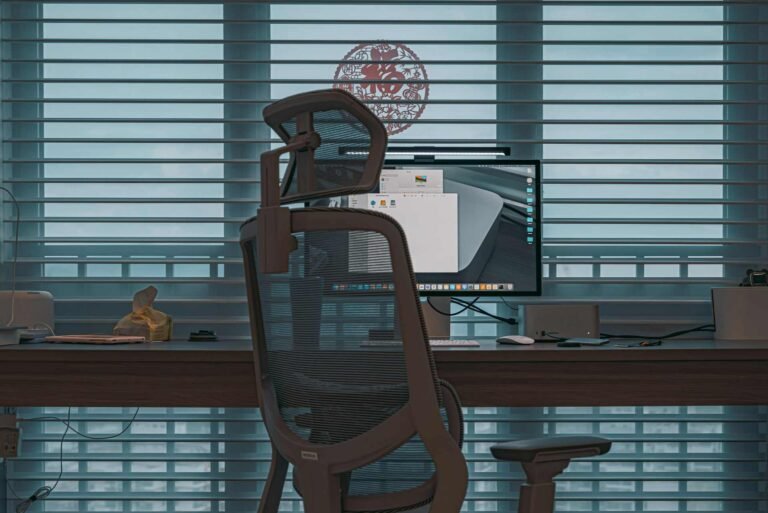
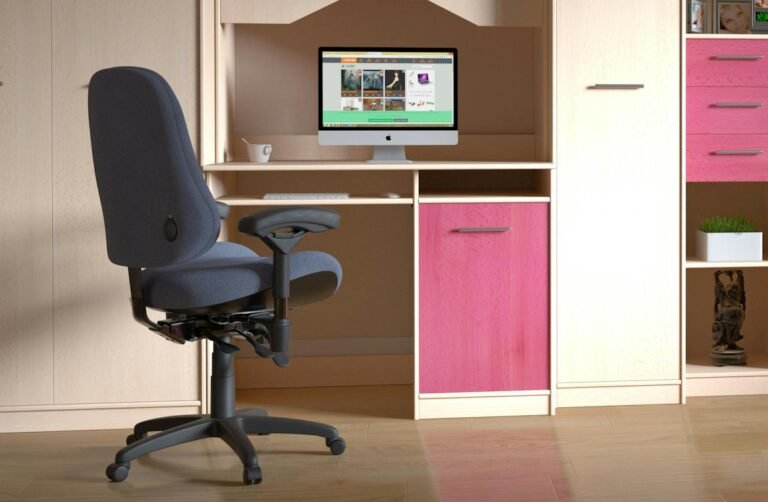
Office Organization Ideas for Small Spaces: Small Desk, Big Impact

Let’s be honest: not all of us have the luxury of a sprawling corner office with floor-to-ceiling windows. Most of us are working with what we’ve got, which might be a repurposed closet, a slice of the dining table, or that awkward nook under the stairs that nobody knew what to do with anyway. But here’s the good news: a small office doesn’t have to mean a chaotic one.
When you’re dealing with limited square footage, every inch counts. That pen holder taking up precious desk real estate? It better be earning its spot. That stack of papers breeding on your chair? It’s got to go. The beauty of small office organization is that it forces you to get creative, think vertically, and actually consider what you need versus what’s just taking up space.
We’ve spent countless hours figuring out how to make tiny workspaces function like they’re twice their size, and we’re here to share what actually works. No fluff, no impossible Pinterest-perfect setups that require a professional organizer and a trust fund. Just practical, real-world solutions that’ll help you reclaim your workspace and maybe even enjoy being there.
The Foundation: Declutter Before You Organize
Here’s the part nobody wants to hear but everyone needs to: you can’t organize clutter. Trust us, we’ve tried. Buying fancy organizers and storage solutions won’t help if you’re just neatly arranging stuff you don’t actually need.
Start by taking everything out. Yes, everything. Desk drawers, shelves, that mysterious box under your desk that hasn’t been opened since 2019. Lay it all out where you can see it. This might feel overwhelming at first, especially in a small space, but stick with it.
Now comes the fun part: the brutal honesty round. Pick up each item and ask yourself when you last used it. If it’s been more than six months and it’s not seasonal or reference material, it probably doesn’t need to live in your workspace. That collection of dried-up pens? Toss them. The conference swag from three jobs ago? Time to let it go.
Create three piles: keep, relocate, and donate or trash. Be ruthless here. Your small office will thank you later. The things you’re keeping should be items you use regularly or that truly spark joy when you work. Everything else is just stealing precious real estate from your productivity. Once you’ve pared down to the essentials, you’ll be shocked at how much space you actually have.
Vertical Storage: Your Small Office’s Secret Weapon
When floor space is at a premium, the only way to go is up. Seriously, walls are your best friend in small office organization, and most people completely underutilize them.
Floating shelves are the obvious starting point, but think beyond just one row of shelves at eye level. Consider installing them at different heights to create visual interest and maximize storage. Higher shelves can hold reference materials or items you don’t need daily, while lower ones keep frequently used supplies within arm’s reach.
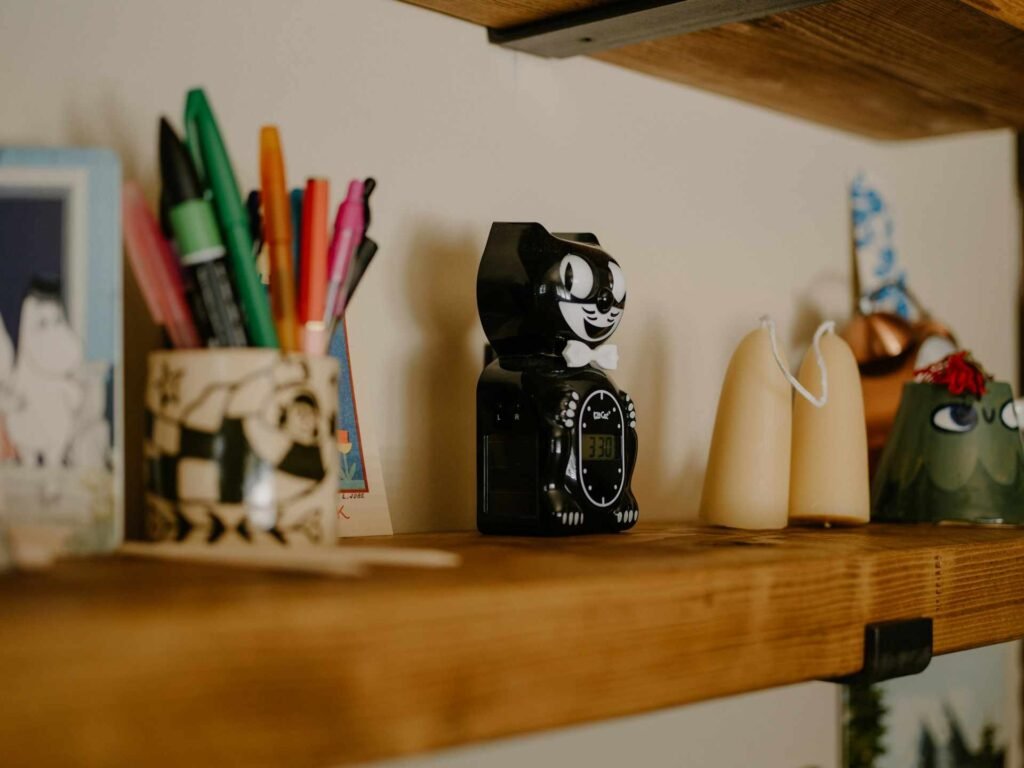
Wall-mounted organizers with pockets or compartments work wonders for corralling smaller items. These can hold everything from sticky notes and paper clips to charging cables and flash drives. The beauty of wall organizers is that they keep things visible and accessible without eating up desk space.
Don’t forget about the space above your desk. A shelf mounted directly over your work surface creates a second tier for your monitor, books, or decorative elements that make your space feel less cramped. Just make sure it’s high enough that you won’t bump your head when you stand up.
Related article: Monitor Wall Mount vs Desk Mount: Which Setup Wins?
Pegboards deserve a special mention here. They’re not just for garages anymore. A pegboard behind your desk transforms a blank wall into customizable storage heaven. Hook on baskets for supplies, clips for papers, and small shelves for your coffee mug collection. The best part? You can rearrange everything as your needs change without putting new holes in the wall.
Consider magnetic boards or strips too. They’re perfect for holding scissors, small tools, or even creating a command center for important notes and reminders. Magnetic containers can stick right to the board, keeping tiny items like thumbtacks or binder clips organized and off your desk surface.
Smart Desk Organization for Tight Quarters
Your desk is ground zero for small desk organization ideas, and getting this right makes everything else easier. The key is to think in layers and zones rather than just shoving everything into drawers and hoping for the best.
First, establish zones for different activities. One area for your computer work, another for writing or sketching, and a designated spot for incoming and outgoing papers. This mental mapping helps you stay organized because everything has a job and a place.
Drawer dividers are non-negotiable. Without them, drawers become black holes where pens, paper clips, and random cables go to die. Pick up some adjustable dividers or even use small boxes to create compartments. Group similar items together: all writing instruments in one section, sticky notes in another, and tech accessories in a third.
Desk organizers can be lifesavers, but choose them carefully. In a small space, you don’t want bulky organizers that take up more room than the items they’re holding. Look for slim, vertical designs that hold your daily essentials without spreading across your entire desk. Tiered organizers work particularly well because they stack items vertically rather than horizontally.
Under-desk storage is often overlooked but incredibly valuable. Rolling drawer units can slide under your desk when not in use, and some even double as footrests. Just make sure whatever you choose doesn’t interfere with your leg room or prevent you from sitting comfortably.
Cable management might seem like a minor detail, but tangled cords can make even the most organized desk look chaotic. Use cable clips or a dedicated charging station to keep power cords and data cables under control. Velcro ties or cable sleeves can bundle multiple cords together so they’re not sprawling across your workspace like digital spaghetti.
Here’s a quick comparison of different desk organizer types and what works best for small spaces:
| Organizer Type | Best For | Space Efficiency | Flexibility |
|---|---|---|---|
| Desk Organizer | Daily supplies, pens, scissors | Medium | Low |
| Drawer Dividers | Hidden storage, multiple categories | High | Medium |
| Wall-Mounted Pockets | Papers, folders, mail | Very High | Low |
| Rolling Cart | Supplies, files, overflow | Medium | Very High |
| Magnetic Containers | Small metal items, clips | Very High | Medium |
| Under-Desk Drawer | Large items, archives | High | Low |
Creative Storage Solutions That Actually Fit
Traditional filing cabinets might be space hogs, but you still need somewhere to put all those papers, supplies, and random office necessities. The trick is finding storage that works with your space, not against it.
Ottoman storage is brilliant for small offices, especially if you occasionally have visitors. These pieces do double duty as seating and hidden storage. Tuck away extra supplies, archived papers, or seasonal items inside, and nobody’s the wiser. Plus, when someone drops by for a quick meeting, you’ve got somewhere for them to sit.
Stackable bins and boxes make the most of vertical space inside closets or on shelves. Go for clear containers so you can see what’s inside without pulling everything down. Label them clearly on multiple sides so you don’t have to play Jenga every time you need something from the bottom bin.
Behind-the-door organizers aren’t just for shoes. Hang one on your office door to hold notebooks, folders, or even a tablet. This completely dead space suddenly becomes prime real estate for items you need regularly but don’t want cluttering your desk.
Furniture with built-in storage deserves serious consideration when you’re dealing with small office space organization. Desks with drawers obviously help, but think about bookcases with cabinets at the bottom, benches with hidden compartments, or even a Murphy desk that folds up against the wall when not in use. Every piece of furniture should work overtime in a small space.
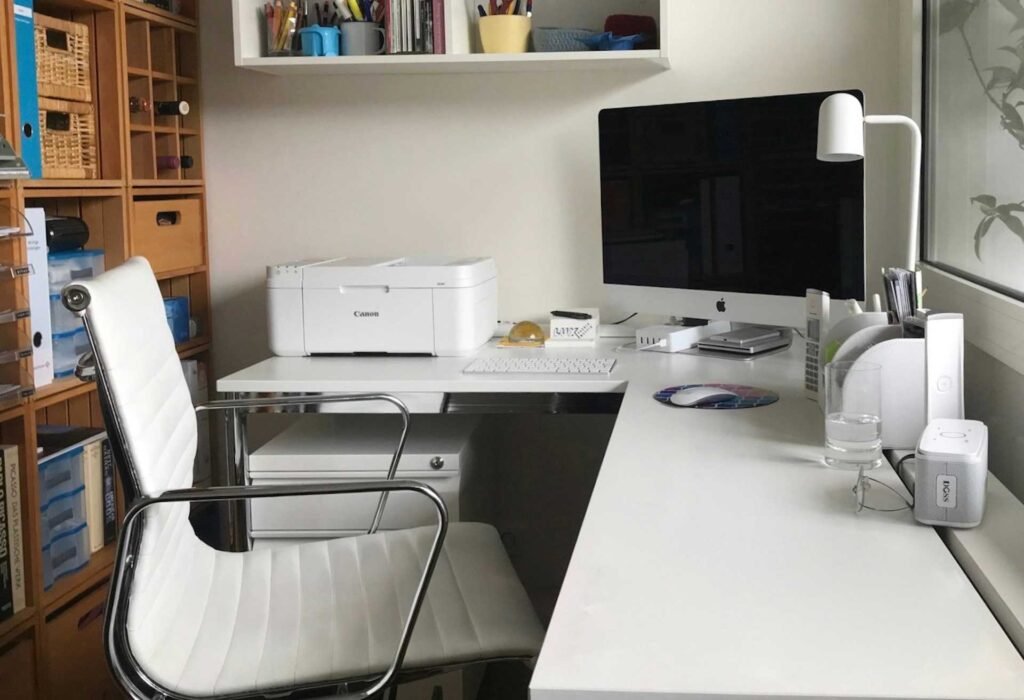
Don’t underestimate the power of a good cart. Rolling storage carts can hold supplies, a printer, or project materials, and they wheel out of the way when you need floor space. Look for slim designs that can squeeze into narrow gaps between furniture. The mobility factor means you can reconfigure your space easily based on what you’re working on.
Digital Organization: Clearing Physical and Virtual Clutter
Small home office organization isn’t just about physical stuff. Digital clutter can be just as overwhelming and space-wasting in its own way. Think about it: if your desktop is covered in random files and your email inbox has 47,000 unread messages, you’re carrying that chaos with you even in a perfectly organized physical space.
Start by tackling your computer desktop. Create folders for different project types or clients, and actually use them. Those fifty files sitting loose on your desktop? They’re the digital equivalent of papers scattered across your desk. Sort them into logical categories and set up a system that makes sense for how you work.
Cloud storage is a game-changer for small offices because it eliminates the need for physical file storage. You don’t need filing cabinets full of papers when everything lives safely in the cloud. Just make sure you have a good organizational system there too. A messy cloud drive is just as useless as a messy filing cabinet.
Calendar management tools can reduce the number of physical planners and sticky note reminders cluttering your space. When your schedule lives digitally and syncs across devices, you free up desk space and reduce the mental load of tracking appointments in multiple places.
Go paperless wherever possible. Sign up for electronic statements, scan important documents and shred the originals if you don’t legally need to keep them, and take notes digitally rather than on notepads. This single change can dramatically reduce the amount of paper storage you need.
Digital task management systems replace those endless to-do lists on scraps of paper. Whether you prefer apps or simple digital documents, getting tasks out of the physical realm and into the digital one means less visual clutter competing for your attention.
Maintaining Your Organized Small Office
Getting organized is one thing. Staying organized is another beast entirely. The truth is, organization isn’t a one-time project; it’s an ongoing practice. But don’t worry, maintaining your small office organization doesn’t have to be a major time commitment.
Develop a daily reset routine. Spend the last five minutes of your workday putting things back where they belong. File papers, clear your desk surface, and straighten up supplies. This tiny habit prevents clutter from accumulating and means you start each day with a clean slate.
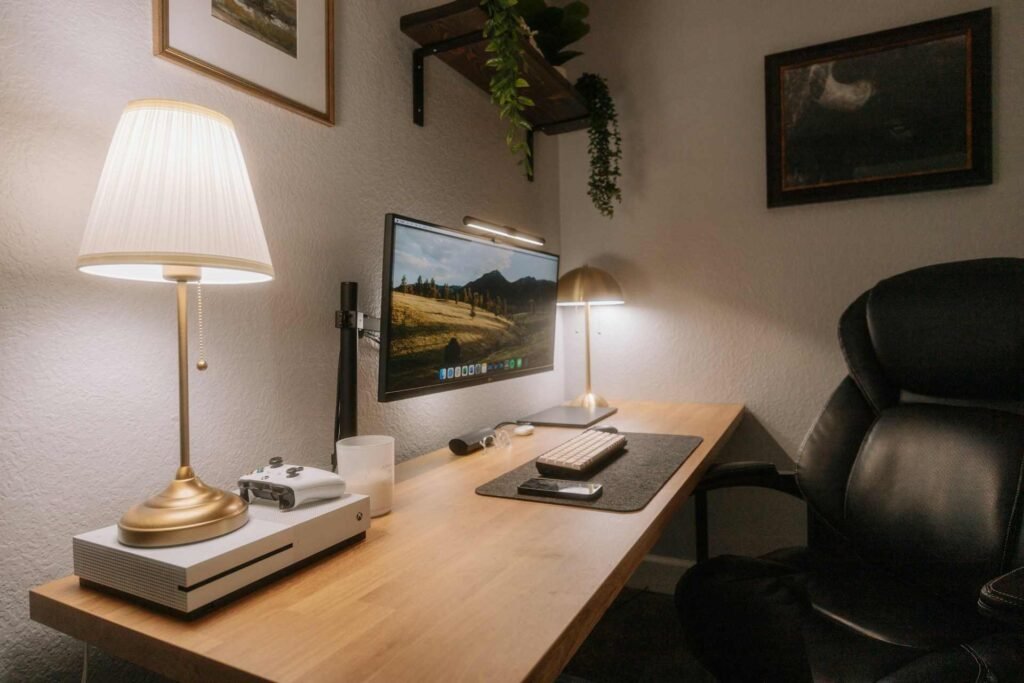
The one-in-one-out rule is your friend in a small space. Every time you bring something new into your office, something else has to leave. New notebook? The old one that’s down to three pages needs to go. Fresh set of markers? Time to toss the dried-out ones. This prevents your carefully organized space from slowly filling back up with stuff.
Schedule regular decluttering sessions. Mark your calendar once a month for a quick organization check-in. Go through your drawers, assess what’s working and what’s not, and make adjustments. Your needs change over time, and your organization system should evolve with them.
Be realistic about your habits. If you constantly find yourself leaving papers in a specific spot, maybe that’s where your inbox should be. Fighting your natural tendencies is exhausting. Work with your instincts instead of against them, and design your organization system around how you actually work, not how you think you should work.
Train yourself to deal with items immediately rather than setting them down “just for now.” That’s how clutter happens. The paper you’re going to file later? File it now. The empty coffee mug you’ll take to the kitchen in a minute? Take it now. These micro-decisions throughout the day make a massive difference.
Maximizing Productivity in Your Newly Organized Space
Now that you’ve got your small office whipped into shape, let’s talk about making the most of it. Organization isn’t just about aesthetics or having a place for everything; it’s about creating an environment where you can do your best work.
Ergonomics matter even more in small spaces because you have less flexibility to move around. Make sure your chair supports your back properly, your monitor is at eye level, and your keyboard and mouse are positioned to prevent strain. If you’re using a standing desk setup, ensure it’s adjusted correctly for your height.
Minimize distractions by being intentional about what’s in your line of sight. In a small office, you can’t escape visual clutter, so keep only items that serve a purpose or bring you joy. That random pile of magazines you’ve been meaning to read? Find them a home elsewhere or admit you’re never going to read them and let them go.
Create boundaries if your small office is part of a larger living space. This could be as simple as a room divider, a specific rug that defines your work zone, or even just a mental rule that when you’re in your office chair, you’re in work mode. These psychological boundaries help you focus even in tight quarters.
Sound management is often overlooked in small office organization. If you’re working in a shared space or your office has thin walls, consider noise solutions. White noise machines, noise-canceling headphones, or even soft background music can create an audio environment conducive to concentration.
Temperature control affects productivity more than most people realize. A small office can get stuffy quickly, especially if it lacks ventilation. Keep the temperature comfortable, use a small fan for air circulation, and consider humidity levels too, as very dry or humid air can be distracting.
Take regular breaks to step away from your small space. When your entire office is within arm’s reach, it’s easy to feel boxed in. Stand up, stretch, take a lap around your home or building, and give your eyes a rest from close-up work. Coming back to your organized workspace with fresh eyes helps maintain your productivity throughout the day.
FAQ
How do I organize a small office with no storage?
When you’re working with absolutely no built-in storage, you need to create your own. Start with vertical solutions like wall-mounted shelves, pegboards, or floating units that don’t require floor space. Under-desk rolling carts provide hidden storage that’s still easily accessible. Furniture that doubles as storage, like ottomans or benches with lift-up lids, maximizes every piece in your space. Wall-mounted pockets and organizers keep papers and supplies visible without eating up surface area. The key is thinking three-dimensionally and using walls, doors, and the space under your desk as prime storage territory.
What’s the best way to organize cables in a small desk setup?
Cable chaos makes any small space feel messier than it is. Start by reducing the number of cables altogether. Use wireless peripherals where possible and invest in a multi-port charging station instead of multiple chargers. For the cables you must keep, use velcro ties or cable sleeves to bundle them together neatly. Adhesive cable clips attach to the underside or back of your desk, routing cords along specific paths and keeping them off the floor. Label cables with tags so you know what’s what when you need to unplug something. A cable management box can hide power strips and excess cord length, creating a cleaner look instantly.
How can I make my small office feel less cramped?
Creating visual space is just as important as physical organization. Light colors on walls and furniture reflect light and make rooms feel more open. Maximize natural light if you have it, and supplement with layered lighting that eliminates dark corners. Use mirrors strategically to create depth and bounce light around. Keep your desk surface as clear as possible; having breathing room visually tricks your brain into feeling less confined. Vertical storage pulls the eye upward, making ceilings feel higher. Minimal, matching organizers create a cohesive look that feels more spacious than mismatched clutter. Finally, keep only what you truly need in the space. Every unnecessary item makes a small office feel smaller.
How often should I reorganize my small office space?
Your organization system should evolve with your needs. Do a quick assessment monthly to catch small problems before they become big ones. Every three to six months, do a deeper evaluation. Are you constantly fighting against your current setup? Do items keep ending up in spots other than where you designated them? These signals mean your system needs adjustment. Seasonal changes might also trigger reorganization, especially if your work varies throughout the year. After major projects or life changes, reassess what’s working. The goal isn’t perfection; it’s creating a system that reduces friction in your daily work. If you’re spending more time organizing than working, you’ve overcomplicated things.
Can I have a functional home office in a closet?
Absolutely! Closet offices, or “cloffices,” have become incredibly popular precisely because they work so well for small home office organization. Remove the closet doors if possible to open up the space visually. Install a desk that fits the width of the closet; many people use a floating shelf at desk height. Utilize the closet’s existing shelving above for storage. Mount a light inside since closets typically lack natural light; even simple clip-on lights work wonders. Use the walls for pegboards or magnetic organizers. Consider adding a curtain that you can close when you’re done working, creating a clean boundary between work and home life. The confined space actually forces excellent organization habits because there’s no room for clutter.
Your Small Office, Your Rules
Getting your small workspace organized isn’t about following some rigid system that works for everyone. It’s about finding what works for you, in your specific space, with your specific work style and needs. What makes sense for someone managing paper files all day looks completely different from someone who works entirely digitally. Someone who takes video calls needs different setup considerations than someone who spends hours deep in spreadsheets.
The beauty of conquering small office space organization is that once you crack the code, maintaining it becomes second nature. Those few minutes of daily tidying feel less like a chore and more like an investment in your sanity. You’ll stop losing things, stop feeling overwhelmed when you sit down to work, and start actually enjoying your workspace instead of fighting against it.
And hey, if you slip up and your desk gets messy again? That’s life. You’re not auditioning for a home office magazine spread. You’re just trying to create a functional space where you can get stuff done. Reset, reorganize, and keep moving forward.
The fact that you’re here, reading this, thinking about how to improve your workspace means you’re already on the right path. Small office organization isn’t about achieving some impossible Pinterest-perfect aesthetic. It’s about clearing away the chaos so you can focus on what actually matters: the work you’re doing and maybe even enjoying the process a little more.
Looking for more? Check out our office furniture category for more articles and guides that may interest you!
Featured image credit: Photo by Ryland Dean on Unsplash
This content is for informational purposes only. Please verify current information directly on the retailer’s site before purchasing.