Do Standing Desks Actually Improve Your Posture? Everything You Need to Know

We’ve all been there. Sitting at our desks for hours on end, feeling our shoulders creep up toward our ears, our backs gradually transforming into question marks. You catch your reflection in a darkened monitor and think, “When did I start resembling a shrimp?” The promise of standing desks has been floating around for years now, with everyone from wellness gurus to that one overenthusiastic coworker swearing they’re the answer to all our postural woes. But do standing desks actually help with posture, or are we all just standing around waiting for a miracle?
Let’s dig into what’s really happening with your spine, your muscles, and whether investing in a height-adjustable workspace is worth your time (and money).
The Posture Problem We’re All Facing
Before we tackle whether standing desks are good for posture, we need to talk about why so many of us are walking around looking like we’re permanently searching for dropped coins on the sidewalk. Modern work life has us glued to screens for eight, ten, sometimes twelve hours a day. Our bodies weren’t exactly designed for this kind of marathon sitting session.
When you’re parked in a chair for extended periods, several things happen that your body isn’t thrilled about. Your hip flexors get tight and shortened, your glutes essentially forget they have a job to do, and your spine starts adopting whatever curve feels easiest in the moment (spoiler: it’s usually not the healthy one). Meanwhile, your shoulders roll forward, your neck juts out like a curious turtle, and your core muscles check out entirely because, well, the chair’s doing all the work.
The result? That hunched, rounded posture that makes you look tired even when you’re not, causes nagging pain in places you didn’t know could hurt, and has you wondering if you’ll need a crowbar to straighten up by the time you’re fifty.
So, Will a Standing Desk Improve Posture?
Standing desks don’t automatically fix your posture like some kind of magical furniture. Sorry to burst that bubble. But here’s what they actually do: they change the game entirely by removing the constraints that sitting imposes on your body.
When you stand, your body has to actively engage muscles to keep you upright. Your core muscles wake up from their sitting-induced nap, your glutes remember they’re supposed to help support your pelvis, and your spine has a fighting chance at maintaining its natural curves instead of collapsing into a C-shape. Standing also prevents that hip flexor tightness that comes from keeping your legs bent at ninety degrees all day.
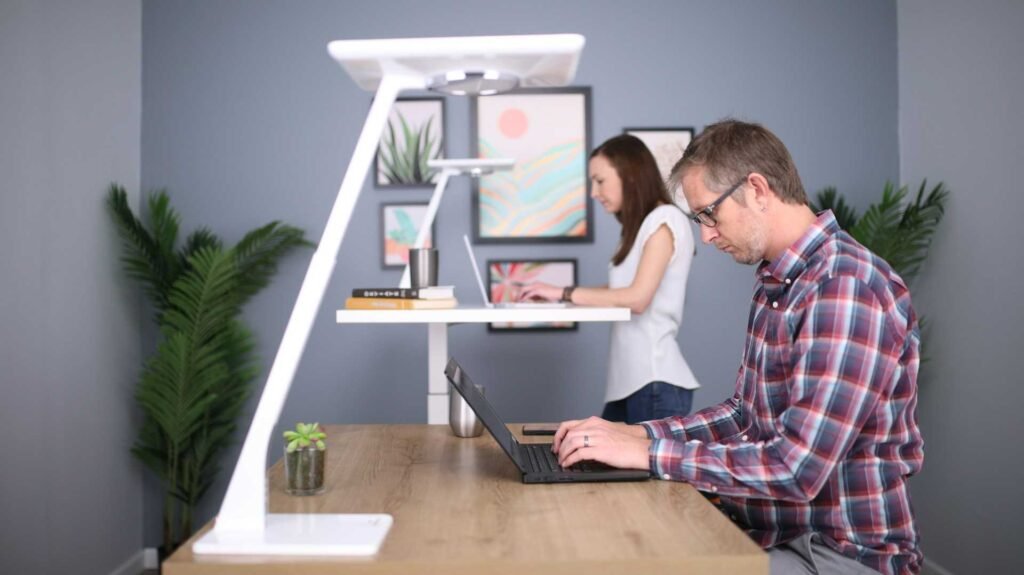
The catch? Standing with terrible posture is just as bad as sitting with terrible posture. If you’re going to lean on your desk, lock your knees, shift all your weight onto one hip, and crane your neck forward to stare at your screen, you haven’t solved anything. You’ve just traded one set of problems for another (and possibly added some foot pain into the mix).
Think of a standing desk as a tool that makes good posture easier to achieve, not a guarantee that you’ll have it. It’s like buying ergonomic accessories for your workspace, they help, but only if you use them correctly.
The Standing vs. Sitting Showdown
Let’s break down what happens to your body in each position, because understanding the mechanics helps explain why alternating between the two is where the real magic happens.
| Aspect | Sitting | Standing | The Sweet Spot |
|---|---|---|---|
| Spinal Pressure | Higher compression on lower back discs | More evenly distributed along spine | Alternating reduces cumulative stress |
| Core Engagement | Minimal, chair provides support | Active engagement required | Builds endurance over time |
| Hip Flexors | Shortened and tight | Extended and lengthened | Movement prevents stiffness |
| Circulation | Reduced, blood pools in legs | Improved, muscles pump blood | Best with occasional walking |
| Energy Levels | Decreases over time | Initially higher, can fatigue | Switching maintains alertness |
| Calorie Burn | Roughly 80 per hour | Roughly 88 per hour | Not significant alone, but adds up |
The real question isn’t whether a standing desk is better for posture than sitting. It’s whether you’re better off having the option to do both. And the answer to that is a resounding yes.
Does Standing Desk Help Posture in Real, Practical Terms?
Let’s get practical for a moment. You’re not going to stand all day (and you shouldn’t), so what does incorporating standing into your work routine actually accomplish for your posture?
First off, standing breaks up the monotony of sustained sitting positions. Every time you transition from sitting to standing, you’re giving your body a chance to reset. Those hip flexors get a stretch, your spine realigns, and the muscles that were taking a break have to clock back in. It’s like hitting a refresh button for your musculoskeletal system.
Standing also makes you more aware of your body positioning. When you’re sitting, it’s easy to slowly slide into progressively worse posture without noticing. But when you’re standing, bad posture often feels uncomfortable pretty quickly. That awkward lean or that locked-knee stance? Your body will let you know it’s not happy, which prompts you to adjust. This increased body awareness carries over even when you sit back down.
Here’s something else worth mentioning: standing encourages more movement overall. When you’re on your feet, you’re more likely to shift your weight, take a few steps, or do a little stretch. Some people even incorporate movement tools into their standing routine, which takes the posture benefits up another notch by engaging stabilizing muscles.
But the biggest practical benefit? Standing desks help with posture by preventing the deep-seated muscle adaptations that come from sitting all day, every day. When your body gets used to being in a shortened, flexed position constantly, it starts to remodel itself around that position. Your muscles literally get shorter, your fascia adapts, and reversing that takes serious effort. By standing regularly, you’re maintaining your body’s full range of motion and keeping those postural muscles functional.
Getting Your Standing Desk Setup Right
Even the fanciest height-adjustable desk won’t help your posture if it’s set up wrong. The setup matters just as much as the decision to stand.
Monitor Height Matters More Than You Think
Your screen should be at eye level, with the top of the monitor roughly at or slightly below your eye line when you’re standing naturally. If your monitor is too low, you’ll crane your neck forward and down, completely negating any posture benefits. Too high, and you’ll be tilting your head back all day, which is its own kind of terrible.

For laptop users, this usually means you need a separate keyboard and mouse so you can elevate your laptop on a laptop stand or riser. Yes, it’s an extra expense, but your neck will thank you. Some people opt for external monitors with adjustable arms that make height changes between sitting and standing seamless.
Keyboard and Mouse Position
Your keyboard should be at a height where your elbows hang naturally at your sides, bent at roughly ninety degrees. Your wrists should be straight, not cocked up or down. If you’re reaching too high or your shoulders are hunched up near your ears, lower that keyboard deck.
The mouse needs to be at the same level as your keyboard, close enough that you’re not reaching forward and rotating your shoulder. Some folks find that switching to alternative input devices helps reduce strain, especially if they’re dealing with existing wrist or shoulder issues.
Foot Position and Support
Stand with your feet roughly hip-width apart, weight evenly distributed. Your knees should be soft, not locked. If you find yourself constantly shifting your weight or your feet start hurting, consider using an anti-fatigue mat under your standing desk. These slightly squishy surfaces encourage subtle movements in your feet and legs, which helps with circulation and reduces fatigue.
Some people also benefit from having a footrest or foot rocker nearby, which allows for position changes and takes pressure off different areas throughout the day.
The Sitting-Standing Sweet Spot
Are standing desks better for posture than traditional desks? Sure, but only if you’re using them correctly, which means not standing all day long.
Research suggests that the ideal ratio is somewhere around alternating every 30 to 60 minutes. Start standing for shorter periods and gradually increase as your body adapts. Some people do great with a 1:1 ratio (equal sitting and standing), while others prefer something like 2:1 (two hours sitting to one hour standing). The right balance depends on your body, your fitness level, and what kind of work you’re doing.
When you first start using a standing desk, you might feel tired or notice your feet or legs getting sore. That’s normal. Your body is using muscles it hasn’t had to engage much before. Start with 15-20 minute standing sessions and build up from there. Think of it like any other form of exercise, your endurance improves with practice.
It’s also worth noting that standing all day can bring its own problems. Prolonged standing is linked to issues like varicose veins, foot problems, and lower back pain. The key is variety and movement, not replacing one static position with another.
Common Standing Desk Mistakes That Sabotage Your Posture
We’ve covered what works, but let’s talk about what doesn’t, because these mistakes are surprisingly common.
Wearing the wrong shoes. Standing in heels or completely flat shoes without support for hours sets you up for foot, leg, and back pain. If you’re going to stand regularly, invest in supportive footwear or keep a comfortable pair under your desk specifically for standing sessions.
Not adjusting your desk height properly between sitting and standing. Your desk height needs to change significantly when you transition between positions. Many people set it once and forget it, which means they’re either standing with their desk too low or sitting with it too high. Take the time to adjust it each time.
Leaning on the desk. It’s tempting to put your forearms or elbows on the desk and lean your weight forward, but this rounds your shoulders and puts pressure on your wrists. Your arms should hang naturally with just your hands and forearms resting lightly on the work surface when typing.
Standing in one spot like a statue. Remember that movement component we talked about? If you’re standing but not moving, you’re missing half the benefit. Set a reminder if you need to, but make sure you’re shifting and moving regularly.
Ignoring pain signals. A little muscle fatigue when you’re building up standing endurance is normal. Sharp pain, numbness, or persistent discomfort is not. If something hurts, adjust your position, take a sitting break, or reassess your setup. Pushing through actual pain doesn’t make you tougher, it just leads to injury.
FAQ
How long should I stand at my standing desk?
Start with 15-20 minute intervals and gradually work up to 30-60 minutes at a time. The goal is to alternate throughout the day rather than standing for one long stretch. Most people find a 1:1 or 2:1 sitting-to-standing ratio works well, but listen to your body and adjust as needed.
Can a standing desk fix my already bad posture?
A standing desk can help improve your posture over time by engaging postural muscles and preventing further adaptations to poor positioning. However, it’s not a magic fix. You’ll likely need to combine it with stretching, strengthening exercises, and conscious attention to your alignment. Think of it as a tool that makes improvement easier, not an automatic solution.
Do I need special shoes for using a standing desk?
While you don’t absolutely need special shoes, supportive footwear makes a big difference in comfort and sustainability. Avoid heels and completely flat shoes without arch support. Many people keep a pair of comfortable sneakers or supportive flats at their desk specifically for standing sessions. An anti-fatigue mat can also help reduce foot discomfort.
Will standing all day burn a lot of calories and help me lose weight?
Standing burns slightly more calories than sitting (roughly 8 more per hour), but it’s not a weight loss strategy on its own. The real benefits of standing desks are related to posture, movement, and reducing the health risks associated with prolonged sitting. If you’re looking to increase calorie burn, focus on getting actual exercise outside of work hours.
How quickly will I notice posture improvements from using a standing desk?
Most people notice they feel less stiff and achy within a few weeks of incorporating regular standing into their routine. Actual postural changes, like improved shoulder position and spinal alignment, typically take longer, often a few months of consistent use combined with attention to proper positioning. The key is consistency and making sure you’re using the desk correctly.
Is it normal to feel tired when I first start using a standing desk?
Absolutely. You’re using muscles that haven’t been working much, and your body needs time to build endurance. Start with short standing intervals and gradually increase the duration. Your legs might feel tired or your feet might get sore initially, but this typically improves within a few weeks as you adapt. If pain persists or worsens, reassess your setup and footwear.
The Bottom Line on Standing Desks and Your Posture
So, do standing desks improve posture? Yes, but with some important caveats. They’re not a miracle cure that automatically straightens your spine and undoes years of slouching. What they actually do is provide you with the option to vary your position throughout the day, which prevents your body from adapting to any single (usually bad) posture.
Standing desks help with posture by engaging your core and postural muscles, maintaining hip flexor length, and making you more aware of your body positioning. They work best when you use them correctly: alternating between sitting and standing every 30-60 minutes, setting up your workspace ergonomically, incorporating movement into your standing time, and paying attention to your body’s signals.
The truth is, whether you’re sitting or standing, static positions held for too long are the real enemy. Your body craves movement and variety. A standing desk gives you the flexibility to provide both, which is why they’ve become such a popular tool for people looking to feel better and move better during their workday.
Will your posture magically transform overnight? No. But give it a few weeks of alternating positions, paying attention to your setup, and actually moving throughout the day, and you’ll likely notice you’re standing taller, feeling less achy, and no longer resembling that little shrimp we talked about at the beginning. And honestly? That’s worth standing up for.
Looking for more? Check out our productivity tools category for more articles and guides that may interest you!
Featured image credit: Photo by TheStandingDesk on Unsplash
This content is for informational purposes only. Please verify current information directly on the retailer’s site before purchasing.
References:
Lee H, Lee Y. Effects of Postural Changes Using a Standing Desk on the Craniovertebral Angle, Muscle Fatigue, Work Performance, and Discomfort in Individuals with a Forward Head Posture. Healthcare (Basel). 2024 Dec 4;12(23):2436. https://doi.org/10.3390/healthcare12232436
Ma J, Ma D, Li Z, Kim H. Effects of a Workplace Sit-Stand Desk Intervention on Health and Productivity. Int J Environ Res Public Health. 2021 Nov 4;18(21):11604. https://doi.org/10.3390/ijerph182111604