How to Reduce Echo in Your Office: A Room-by-Room Guide
You hop on a video call, say hello, and your own voice comes bouncing right back at you like a boomerang. Your colleague asks you to move closer to the mic. You do. It gets worse. The echo problem, one of the most quietly maddening issues in modern office spaces, whether that’s a spare bedroom you’ve converted into a home office or a glass-and-concrete open-plan floor downtown.
It often has nothing to do with your microphone, your internet connection, or anything tech-related at all. It’s your room. This guide walks through why echo happens, what stops it, and how to make your workspace sound as good as it looks, without ripping out the drywall.
Why Offices Echo So Much
Echo, or more technically, excessive reverberation, happens when sound waves bounce off hard, flat surfaces and take longer than about 0.3–0.5 seconds to decay. That overlap between the original sound and the reflected sound is what creates that hollow, cave-like quality.
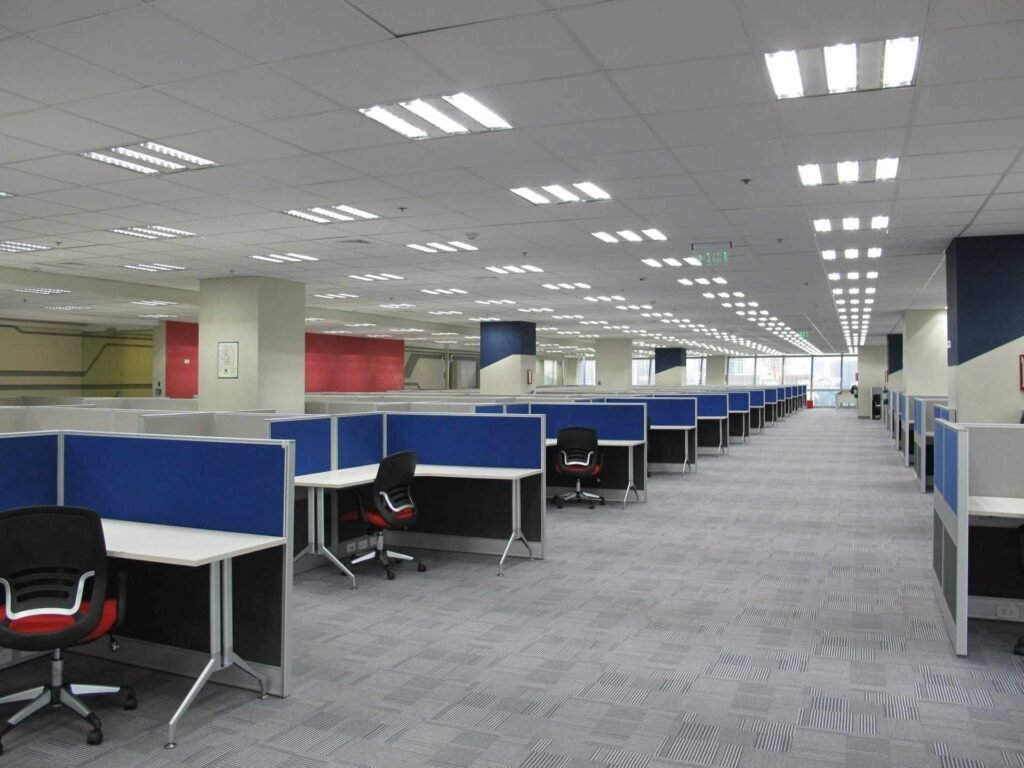
Modern office design is a perfect storm for this. Open floor plans, minimal soft furnishings, polished concrete or hardwood floors, floor-to-ceiling windows, exposed ceilings, all of these are beautiful to look at and catastrophic for acoustics. A 2019 study published in the International Journal of Environmental Research and Public Health found that irrelevant speech noise was the most frequently cited source of annoyance among open-plan office workers, with measurable effects on concentration and mental well-being. And another widely cited figure from a World Green Building Council report puts the productivity loss from excessive background noise at up to 66%.
Home offices have their own version of this problem. Small, boxy rooms with bare walls and laminate flooring act like echo chambers. Add a desk pushed against a wall, and you’ve created a little acoustic nightmare for your video calls.
The ABCs of Echo Reduction: Absorb, Block, Mask
The U.S. General Services Administration actually summarized the approach in one of their workplace acoustics guides: absorb, block, and mask. That three-part framework is a solid starting point.
Absorb: Adding Softness to the Room
This is where most of your gains will come from, especially in a home office echo reduction context. Hard surfaces reflect sound; soft ones absorb it. The more soft material you introduce, the more sound energy gets converted to a tiny amount of heat instead of bouncing back at you.
Some of the most effective options:
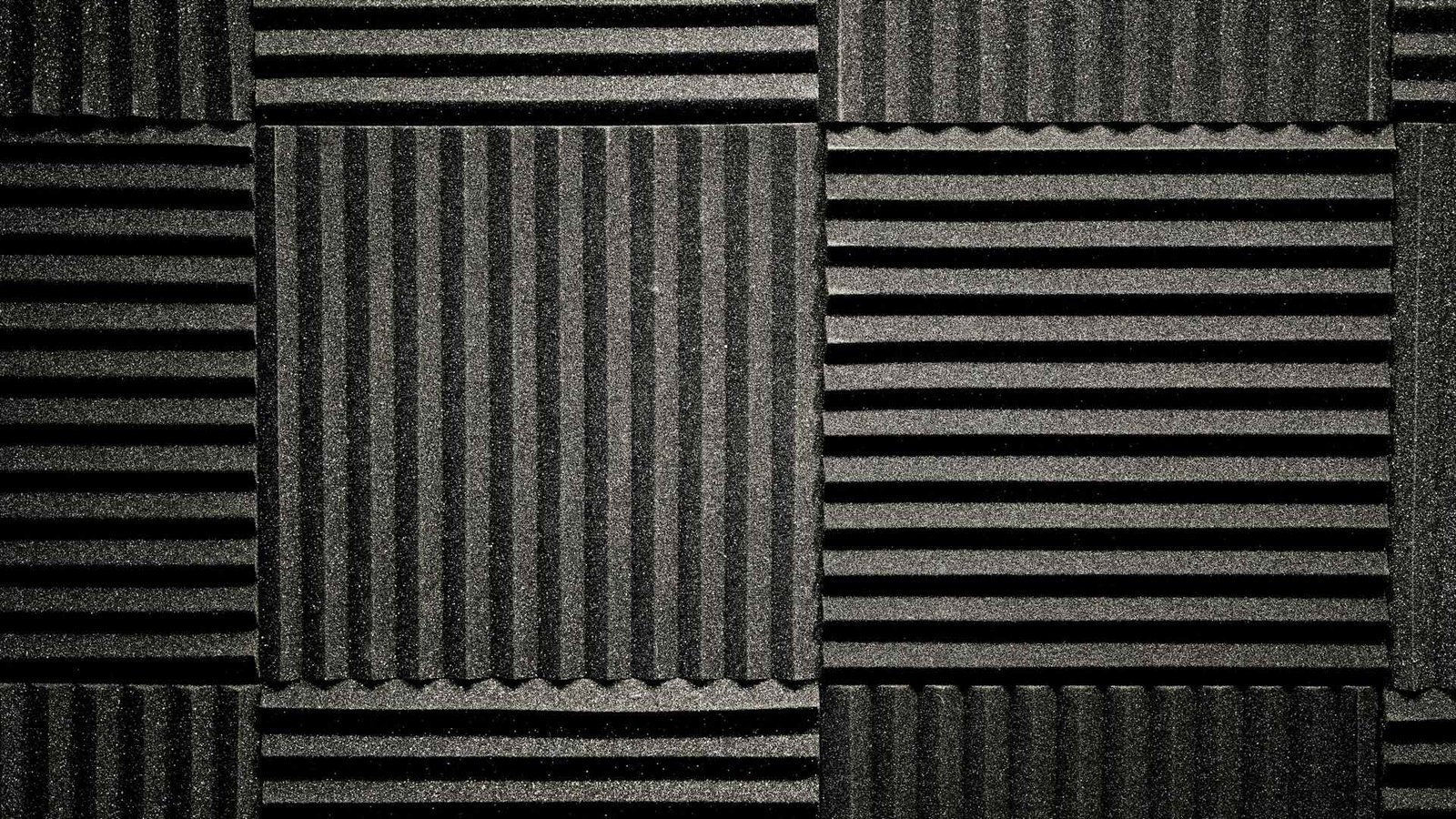
Acoustic foam panels and wall-mounted sound absorbers are specifically engineered to reduce mid-to-high frequency reflections. Look for panels with an NRC (Noise Reduction Coefficient) rating of at least 0.75, that means they absorb 75% of sound that hits them. For a typical home office, covering roughly 25–30% of your wall surface is a reasonable starting target. You don’t need to wallpaper the whole room.
Thick rugs and area carpets are one of the easiest and cheapest wins, particularly on hard floors. A dense rug under your desk area can noticeably reduce the flutter echo that typically bounces between floor and ceiling. The thicker the pile and the heavier the backing, the better.
Upholstered furniture does more acoustic work than most people credit it with. A fabric sofa, cushioned chairs, or even a well-stuffed bookshelf all function as passive sound absorbers. Dense bookshelves filled with books are particularly good because the irregular surfaces scatter sound waves rather than reflecting them cleanly.
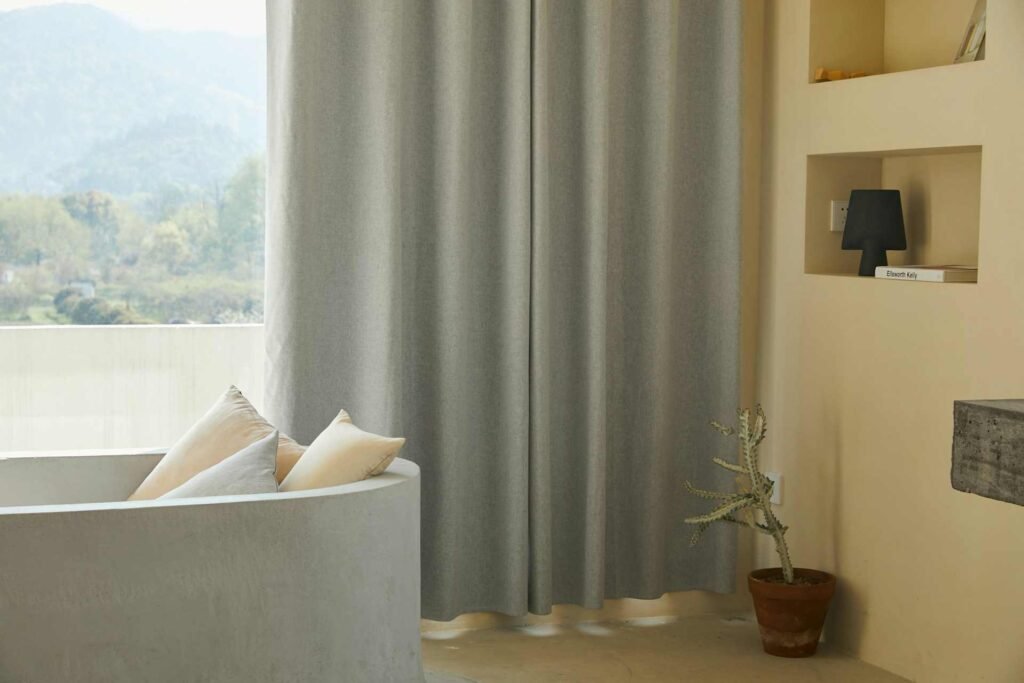
Heavy curtains or drapes over windows are underrated for home office echo reduction. Bare windows are reflective surfaces. Covering them with floor-length velvet or linen drapes can take a surprising amount of edge off a reverberant room, especially during calls.
Ceiling treatments are often overlooked but acoustically significant. Hanging baffles or suspended acoustic clouds above a workspace target the ceiling-to-floor reflection path, which is one of the longest and most problematic in typical rooms. These are especially useful in spaces with high ceilings.
Block: Separating Sound at the Source
Blocking is more relevant in shared or open-plan office settings where multiple people are working, talking, or on calls simultaneously. The strategy here is to interrupt sound travel paths using physical barriers.
Freestanding acoustic divider panels placed around a desk or workstation can reduce the direct transfer of speech between neighboring workers by around 10 dB, which is acoustically significant. That’s roughly the difference between hearing a colleague clearly and hearing them as a background murmur. These panels typically combine a dense core (for mass) with a soft outer layer (for absorption), and many of them double as desk privacy screens.
In more permanent setups, a room-within-a-room approach using decoupled interior walls is the gold standard, but that’s a renovation, not a quick fix. For most home offices and smaller workplaces, soft partitions and furniture placement are the realistic path.
Mask: Using Sound to Cover Sound
This one sounds counterintuitive, but adding a gentle layer of background sound actually reduces the perceived impact of echo and noise, because it narrows the gap between the “loud moment” and the ambient baseline. White noise machines and pink noise systems are commonly used for this, set to around 50–60 dB (similar to a quiet library).
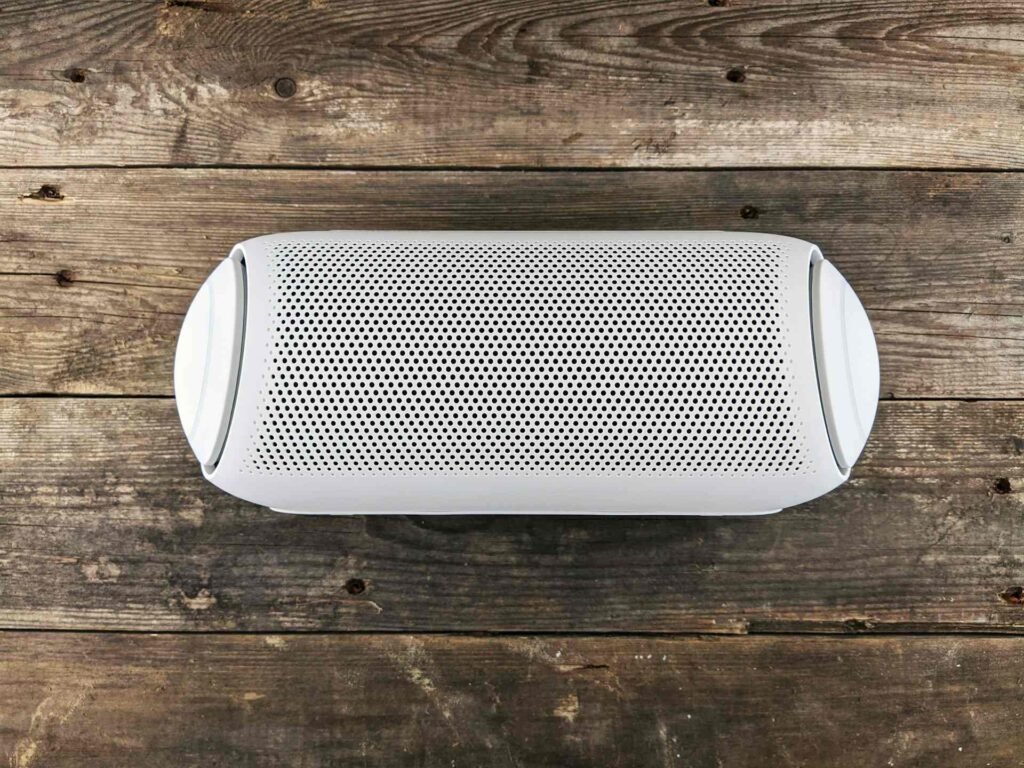
For people who find pure white noise irritating, pink noise (which is weighted toward lower frequencies) or brown noise are often more comfortable for extended work sessions. There’s also a broader question about whether background sound helps focus generally.
Room-by-Room: What Works Where
The right approach shifts depending on where you’re working and what the room looks like. Here’s a practical breakdown:
| Setting | Main Problem | Top Fix | Secondary Fix |
|---|---|---|---|
| Home office (small, bare room) | Flutter echo between parallel walls | Acoustic wall panels + thick rug | Heavy curtains, soft chair |
| Open-plan corporate office | Reverberation + speech noise overlap | Ceiling baffles + desk dividers | White noise masking system |
| Conference/meeting room | Long reverberation time on calls | Wall panels + acoustic ceiling tiles | Upholstered seating, carpet |
| Basement/garage office | Strong low-frequency buildup | Bass traps in corners + area rugs | Sealed door gaps |
| Co-working space | Unpredictable mix of reflections | Portable acoustic screens | Noise-canceling headset |
One thing worth flagging here: basement and garage offices often have a low-frequency echo problem that standard acoustic foam barely touches. Bass frequencies have long wavelengths and require thick, dense absorbers or corner bass traps specifically designed to target the 80–250 Hz range. If your room sounds boomy rather than “ringy,” that’s the culprit.
Specific Fixes for the Home Offices
Working from home has its own flavor of acoustic challenges. Corporate spaces at least sometimes have acoustic consultants involved. A spare bedroom or a kitchen table setup? You’re largely on your own.
Here’s a sequence that works, starting with the highest-impact moves:
Start with the floor. If you have hard flooring, a large area rug is your first and most affordable move. Go for something at least 5×7 feet and place it under or in front of your desk. The denser the rug, the more effective.
Address your walls. Mount a set of fabric-wrapped acoustic panels or foam tiles on the wall directly facing you and on the wall to your side. The goal is to interrupt the first reflection points, the spots where sound bounces off before reaching your ears a second time. First reflection points are usually directly to your left and right at ear height, and on the ceiling above your desk.
Sort out your ceiling if you can. A suspended fabric canopy or even a few hanging panels above the desk can make a noticeable difference in rooms with high or particularly reflective ceilings.
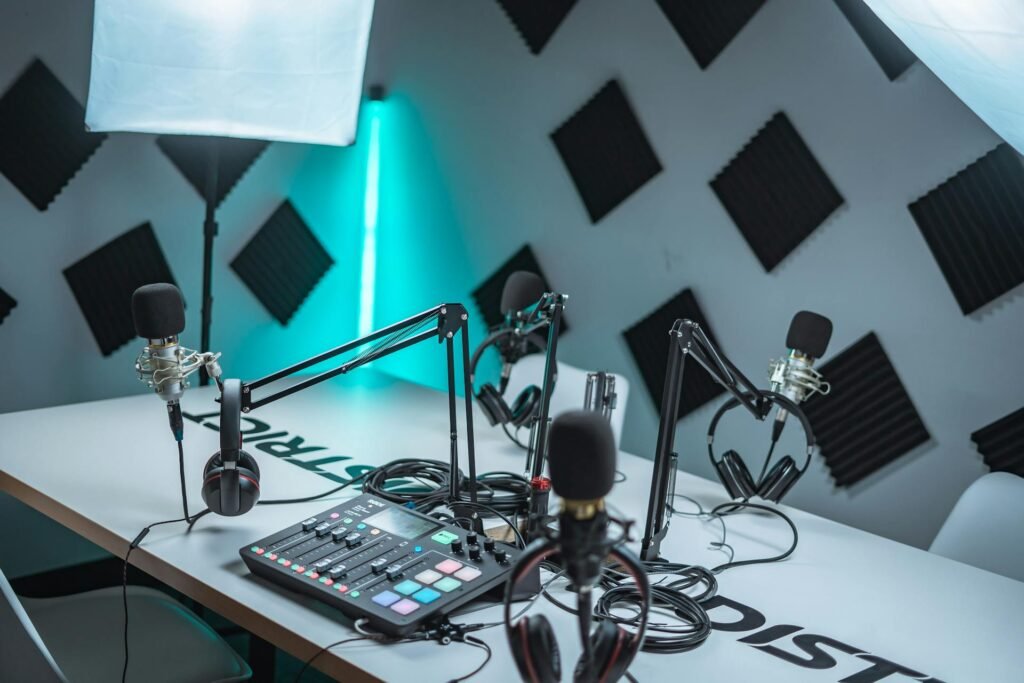
Don’t overlook your microphone setup. This isn’t exactly acoustic treatment, but a directional cardioid microphone placed close to your mouth (6–8 inches) will pick up far less room reverb than a webcam mic across the desk. A good USB microphone or a clip-on lavalier mic can mask a lot of remaining room echo on calls.
Plants add more than aesthetics. Dense leafy plants, particularly larger varieties with broad leaves, scatter sound and contribute to a slightly more diffuse, less reflective environment. They won’t fix a bad echo problem alone, but as part of a layered approach, they’re a genuinely functional addition, and better looking than foam squares.
Related article: The Best Office Plants for Clean Air
What to Look For in Acoustic Products
The acoustic treatment market has a wide range of products, from genuinely effective professional-grade panels to overpriced decorative foam that does almost nothing. A few things to check before buying:
NRC Rating. As mentioned earlier, look for an NRC of 0.75 or higher for panels you want to actually do something. Many cheap foam tiles sold as “soundproofing” have NRC values below 0.4, which is largely decorative.
Thickness. Thinner foam panels (1 inch or less) only absorb high frequencies, the “sss” and “ttt” sounds. For the fuller, mid-range echo that makes voices sound hollow, you need at least 2-inch panels, ideally 4 inches for any meaningful low-mid absorption.
Fabric-wrapped vs. foam. Fabric-wrapped fiberglass or rockwool panels typically outperform open-cell foam at the same thickness. They also look more professional in a workspace and are more durable over time.
Placement beats quantity. Six well-placed panels will outperform twelve randomly scattered ones. Focus on first reflection points and parallel wall pairs before covering every surface.
Soundproofing vs. Sound Absorption
These two terms can get conflated, and it leads to a lot of frustrated people who bought acoustic foam expecting it to stop their neighbor’s music from coming through the wall. They’re completely different things.
Sound absorption reduces echo and reverberation within a room. Acoustic panels, rugs, curtains, this is what they do.
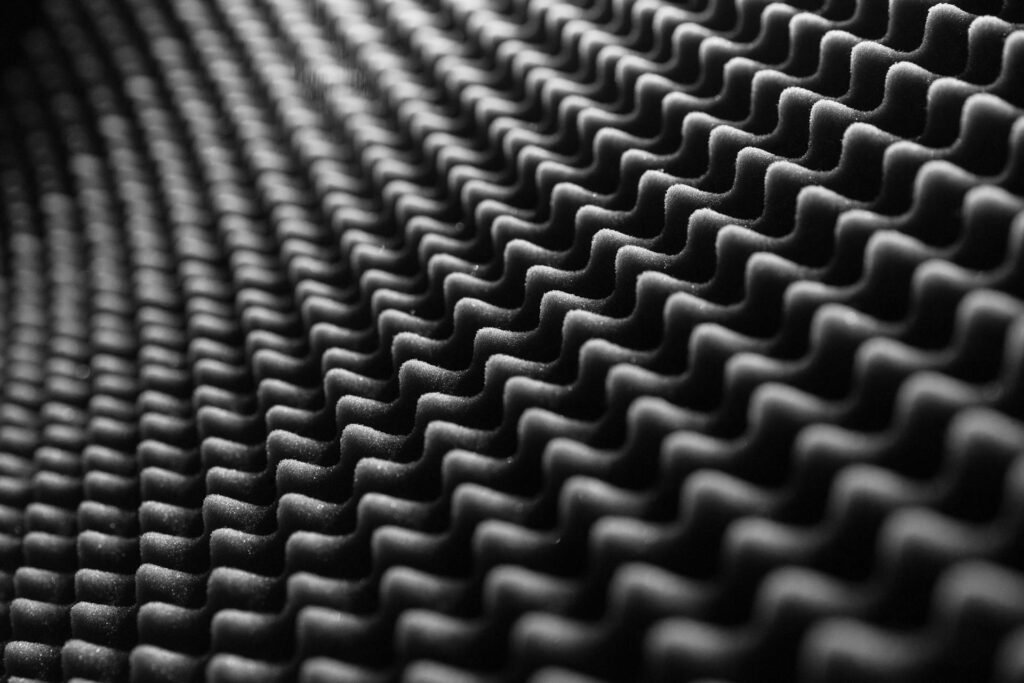
Soundproofing (technically called sound isolation) prevents sound from traveling between rooms. This requires mass, decoupling, and sealing, things like dense drywall, resilient channels, heavy doors with proper seals, and sealed gaps.
Most of what we’ve discussed in this article is sound absorption. If your issue is that sound is leaking into your workspace from outside, the approach is different and generally more involved. Sealing gaps around doors and windows with acoustic door sweeps and weatherstripping is the accessible first step; beyond that, you’re into construction territory.
If you share a workspace with others and are dealing with an environment full of distractions, a combined approach of physical barriers plus white noise masking is typically the most practical solution without a full renovation.
FAQ
Conclusion
An echoey workspace actively chips away at your concentration, makes calls harder to hold, and adds a layer of low-grade stress to your day that you probably don’t even fully register until it’s gone. The fix is rarely dramatic or expensive; it usually comes down to getting more soft surfaces into the room.
Start with the floor. Then the walls. Then your microphone. Tackle each layer in order, test after each addition, and most home offices are significantly improved within a weekend and a moderate budget.
Whether you’re deep in a corporate open-plan maze or just trying to stop your spare bedroom from sounding like a bathroom, the path forward is the same: more soft, less hard, and a little bit of strategic placement.
Looking for more? Check out our work environment category for more articles and guides that may interest you!
Featured image credit: Photo by 2H Media on Unsplash
This content is for informational purposes only. Please verify current information directly on the retailer’s site before purchasing.
References:
Bergefurt, Lisanne & Appel-Meulenbroek, Rianne & Arentze, Theo. (2024). Level-adaptive sound masking in the open-plan office: How does it influence noise distraction, coping, and mental health?. Applied Acoustics. 217. 109845. https://doi.org/10.1016/j.apacoust.2023.109845
Di Blasio S, Shtrepi L, Puglisi GE, Astolfi A. A Cross-Sectional Survey on the Impact of Irrelevant Speech Noise on Annoyance, Mental Health and Well-being, Performance and Occupants’ Behavior in Shared and Open-Plan Offices. Int J Environ Res Public Health. 2019 Jan 19;16(2):280. https://doi.org/10.3390/ijerph16020280
ISO 3382-1:2009(en) Acoustics — Measurement of room acoustic parameters. https://www.iso.org/obp/ui/#iso:std:iso:3382:-1:ed-1:v1:en
Kaarlela-Tuomaala, A., Helenius, R., Keskinen, E., & Hongisto, V. (2009). Effects of acoustic environment on work in private office rooms and open-plan offices – longitudinal study during relocation. Ergonomics, 52(11), 1423–1444. https://doi.org/10.1080/00140130903154579
Shi, Kun & Ma, Xiaoli & Zhou, G.. (2009). An efficient acoustic echo cancellation design for systems with long room impulses and nonlinear loudspeakers. Signal Processing. 89. https://doi.org/10.1016/j.sigpro.2008.07.009
U.S. General Services Administration. Sound Matters: How to Achieve Acoustic Comfort in the Contemporary Office, 2011. https://www.gsa.gov/system/files/GSA_Sound_Matters_%28Dec_2011%29_508.pdf
Valtteri Hongisto, Johanna Varjo, Henri Leppämäki, David Oliva, Jukka Hyönä, Work performance in private office rooms: The effects of sound insulation and sound masking, Building and Environment, Volume 104, 2016, Pages 263-274, ISSN 0360-1323. https://doi.org/10.1016/j.buildenv.2016.04.022
Wikipedia. Noise reduction coefficient. https://en.wikipedia.org/wiki/Noise_reduction_coefficient
World Economic Forum (2016). Could reducing noise make offices more productive? https://www.weforum.org/stories/2016/03/could-reducing-noise-make-offices-more-productive/
Last reviewed and edited on 02.03.2026