The Best Office Plants for Clean Air (With Research to Back It Up)
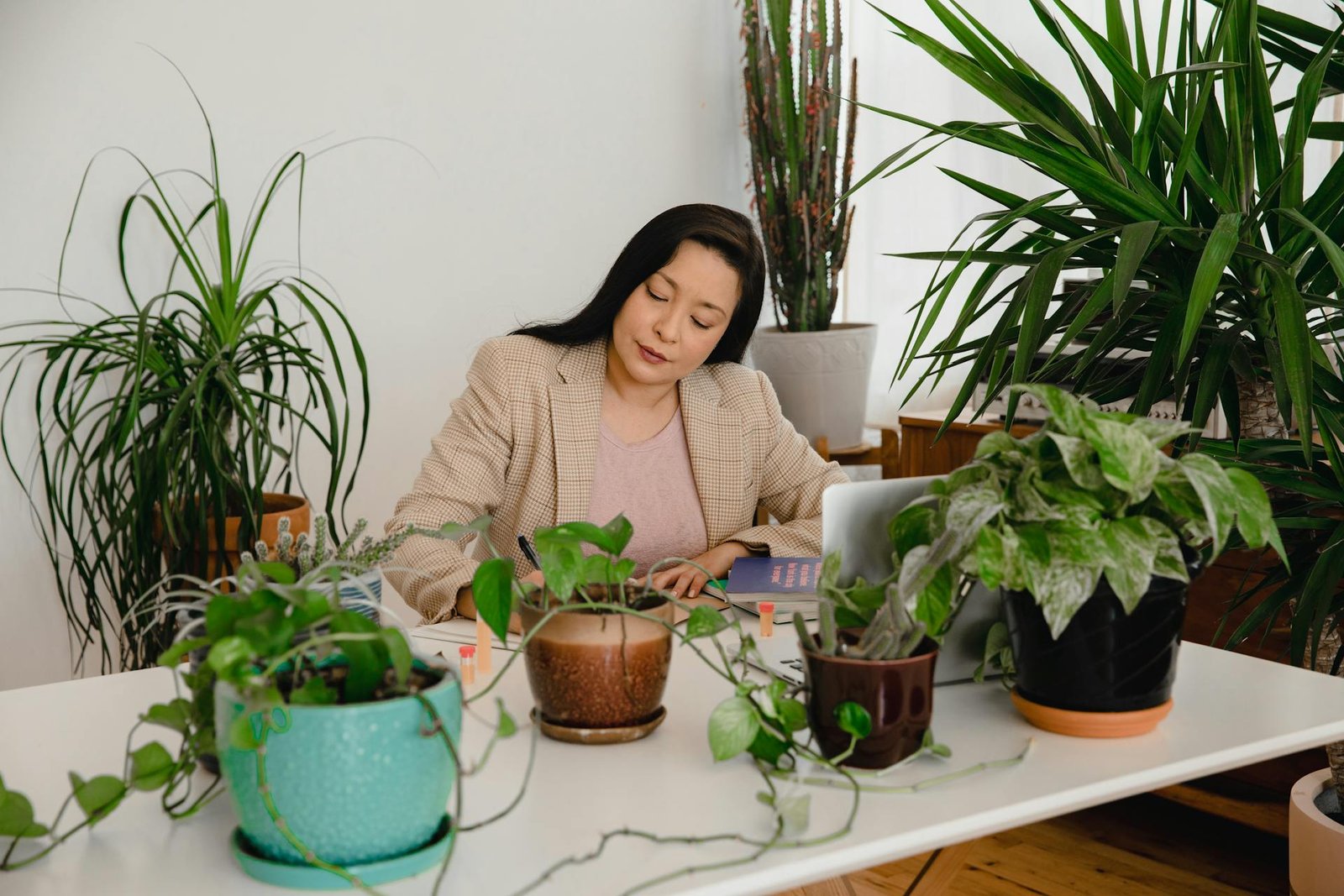
So you’ve been eyeing that sad little desk, surrounded by printer fumes, stale recycled office air, and the ghost of someone’s reheated fish from three weeks ago. A plant sounds like a great idea. A few strategically placed leafy companions, and suddenly your workspace turns into a fresh-air sanctuary, right?
Well, mostly. But the story is a bit more nuanced than the Instagram plant accounts would have you believe, and knowing the full picture is what separates a genuinely smart desk plant setup from a well-intentioned pot of dirt. We’re going to dig into the best office plants for clean air, what they can realistically do, and how to actually get results without turning your cubicle into a greenhouse.
Why Office Air Quality Is Low
Most people assume outdoor air is the polluted stuff. Indoor air quality in a typical office building can be two to five times worse than outdoor air, according to the EPA.
A large part of the culprit is a phenomenon researchers called “sick building syndrome,” first documented seriously in the late 1970s when energy-efficient construction led to tighter, less-ventilated buildings. Workers started reporting headaches, eye irritation, fatigue, and respiratory issues that vanished on weekends. The connection wasn’t hard to trace: modern synthetic building materials, office furniture, carpet adhesives, printer toner, and even cleaning products continuously off-gas volatile organic compounds (VOCs) like formaldehyde, benzene, toluene, and trichloroethylene into the air.
Here’s what makes that worse in a modern office: pollutants don’t have anywhere to go. HVAC systems recirculate the same air, and unless someone’s cracking a window (a rare luxury in a sealed office tower), those VOC concentrations quietly accumulate throughout the workday. It’s one reason that getting your office temperature dialed in can affect not just comfort but the concentration of airborne irritants, since warmer spaces tend to accelerate off-gassing from furniture and carpet.
That’s exactly the problem NASA set out to solve in the 1980s, and plants turned out to be part of the answer.
The NASA Clean Air Study
In 1989, NASA researcher Dr. B.C. Wolverton published one of the most cited studies in indoor plant research: Interior Landscape Plants for Indoor Air Pollution Abatement. The goal was blunt and practical: NASA needed to figure out how to keep astronauts healthy in sealed space habitats where VOCs had nowhere to go.
What Wolverton’s team found was fascinating. Houseplants placed in sealed chambers were able to remove meaningful quantities of benzene, formaldehyde, and trichloroethylene from the air over 24-hour periods. Crucially, it wasn’t just the leaves doing the work. The root zone microorganisms, the soil bacteria that colonize the rhizosphere, were identified as major contributors to VOC breakdown. In some tests, stripping the foliage from a plant but leaving the root system in soil still produced significant pollutant reduction. That rhizosphere mechanism is what makes the “plants are air purifiers” claim partially true and also the basis for modern active botanical biofilter systems.
Wolverton recommended at least two good-sized plants per 100 square feet of indoor space as a practical starting point.
The Catch: Real Offices Aren’t Sealed Chambers
The NASA study tested plants in sealed experimental chambers roughly the size of the plant itself. Your office is not a sealed chamber. A 2019 meta-analysis published in the Journal of Exposure Science & Environmental Epidemiology looked at 196 VOC removal tests from 12 published papers and concluded that, at realistic room sizes and ventilation rates, you would need somewhere between 10 and 1,000 plants per square meter of floor space to match what an HVAC system or a dedicated HEPA air purifier does passively.
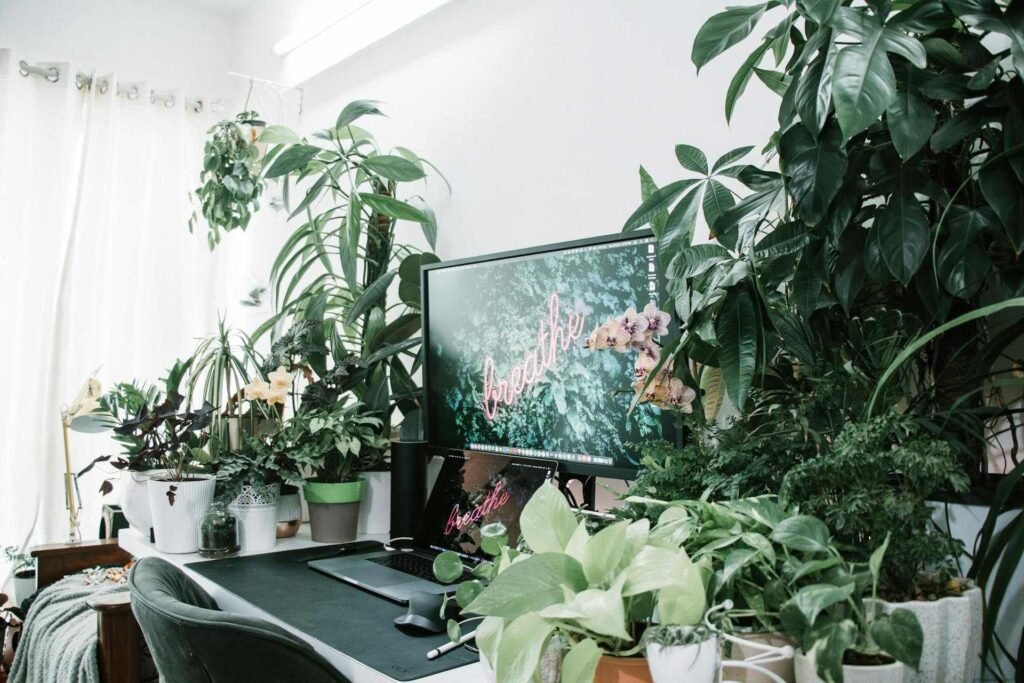
That’s obviously not practical. And it doesn’t mean plants are useless. It means they work best as a complement, not a replacement, for proper ventilation.
So the nuanced answer is this: a well-chosen cluster of the right plants, placed thoughtfully in a relatively enclosed workspace, does make a real difference in air quality, particularly for VOC reduction. It’s not a substitute for fresh air or a quality desk-side air purifier, but it’s not a myth either.
The Best Office Plants for Air Quality: Our Top Picks
Below we’ve broken down the top performers based on cross-referenced research from the NASA study, subsequent phytoremediation reviews, and real-room experiments. These are the best plants for office air quality across the board, taking into account how manageable they are in a typical workspace.
Spider Plant (Chlorophytum comosum)
The spider plant is practically indestructible, which is already a strong argument for office use. It’s also one of the most studied for formaldehyde absorption, with a high removal rate relative to its leaf surface area. The NASA study documented strong performance against formaldehyde and carbon monoxide, and more recent research confirmed its effectiveness with xylene removal.
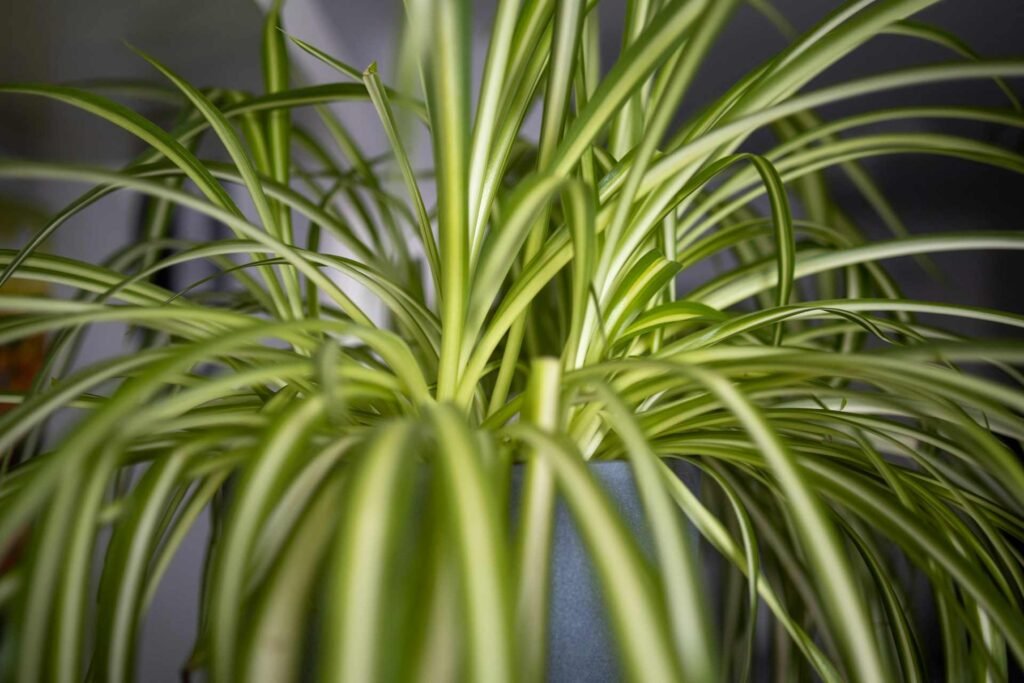
It thrives in indirect light, needs watering once a week, and is non-toxic to humans, cats, and dogs. For a shared office where you can’t guarantee no one will touch it, that safety profile matters. Propagating it is almost embarrassingly easy; the little “spiderettes” it throws off root in water in about a week.
Ideal for: Any desk with moderate indirect light. One mid-sized spider plant covers approximately 100 square feet effectively as a passive VOC absorber.
Snake Plant (Sansevieria trifasciata, now reclassified as Dracaena trifasciata)
If there were a productivity award for office plants, the snake plant would win it on consistency alone. It tolerates low light, low humidity, erratic watering schedules, and general neglect with almost insulting ease.
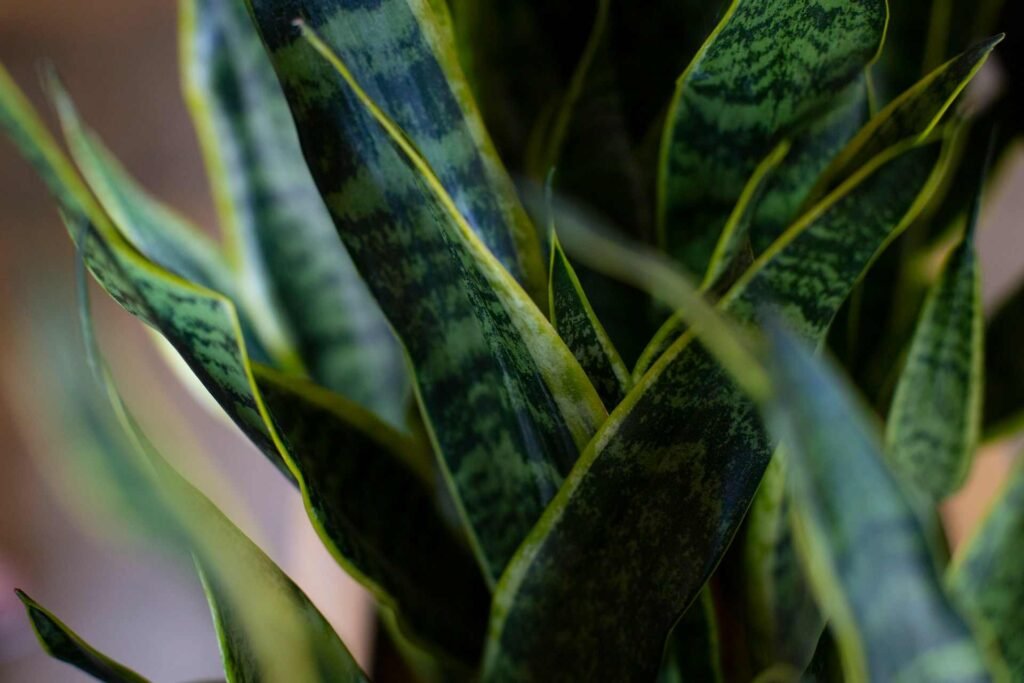
From a research standpoint, Sansevieria trifasciata showed the highest benzene purification per unit leaf area in a 2024 study in Scientific Reports, outperforming 12 other tested plant species. It’s also one of the few plants that performs Crassulacean Acid Metabolism (CAM) photosynthesis, meaning it absorbs CO₂ and releases oxygen at night rather than during the day, unlike most plants. That makes it a smart addition to a bedroom home office setup where you want continuous air quality support.
Snake plants also produce no pollen and are low on the allergen scale for most people, making them one of the better air-purifying indoor plants for offices where respiratory sensitivities vary across employees.
Ideal for: Low-light corners, window-free offices, or anyone who has killed every other plant they’ve ever owned.
Peace Lily (Spathiphyllum wallisii)
The peace lily is the overachiever of the air-purifying plant world. NASA’s original study ranked it among the top performers for removing benzene, formaldehyde, trichloroethylene, acetone, and alcohols from sealed-chamber air. More recent research published in Scientific Reports found Spathiphyllum floribundum (a close relative) had the highest overall benzene purification rate of all 13 tested species.

On top of that, peace lilies have a notably high transpiration rate, releasing significant moisture into the air, which benefits dry office environments. One caveat worth knowing: peace lilies are toxic to humans and pets if ingested, so they’re better placed on a shelf rather than directly on a shared desk.
They prefer shade or indirect light and tell you loudly when they need water by dramatically drooping their leaves, only to recover within hours of a drink. It’s the most dramatic plant on this list and somehow also one of the most resilient.
Ideal for: Shelved positions in offices with moderate humidity needs and no pets or small children.
Pothos (Epipremnum aureum)
If the snake plant wins for consistency, pothos wins for sheer efficiency per dollar. It was one of the plants used in NASA’s sealed-chamber activated carbon biofilter trials, demonstrating effective removal of both benzene and trichloroethylene even at lower VOC concentrations.
Pothos grows fast, trails attractively from shelves or hanging planters, and is nearly impossible to kill. Its large leaf surface area is part of why it works well; more leaf area means more stomatal surface through which air-borne compounds can be absorbed. A single mature pothos in a well-draining pot can produce dramatic trailing growth that effectively increases its air-scrubbing coverage without taking up additional desk space.
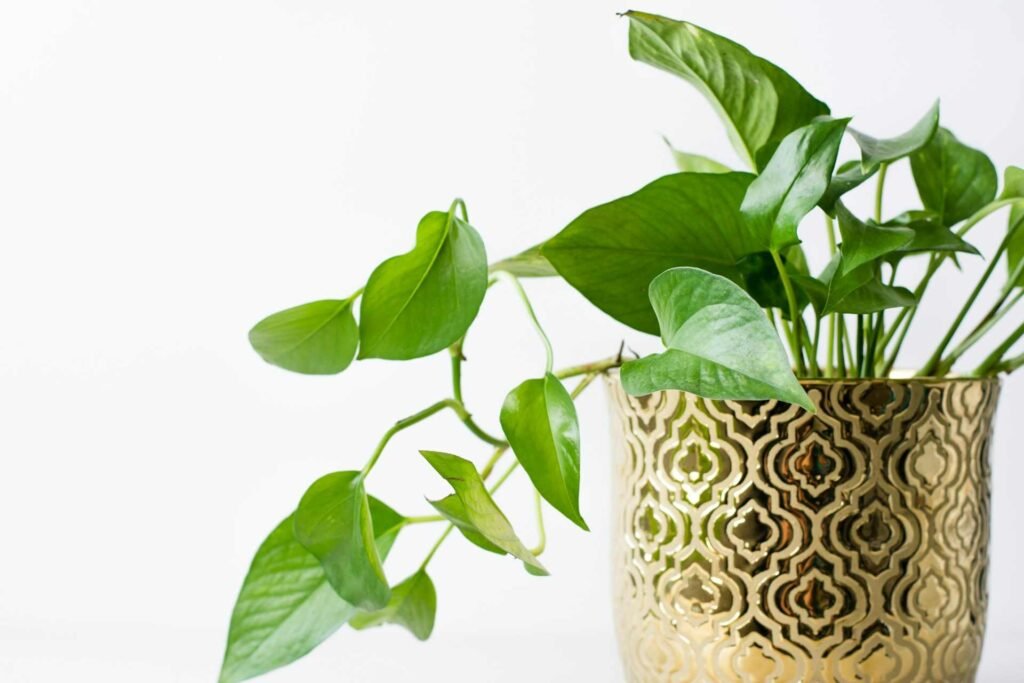
One practical tip: pothos in brighter indirect light produces significantly more leaf area than pothos in deep shade, and leaf area directly correlates with VOC removal capacity. Position it near a window if you can.
Ideal for: Shelves, hanging planters, or cascading down a bookshelf. Also perfect for the office where lighting conditions are unpredictable.
Dracaena (Various species, especially D. marginata and D. fragrans)
Dracaena species were among the standout performers in the NASA study for formaldehyde and trichloroethylene removal. Dracaena fragrans (the “corn plant”) was specifically highlighted in the 2022 Air Quality, Atmosphere & Health study for measurable nitrogen dioxide reduction in real room conditions.
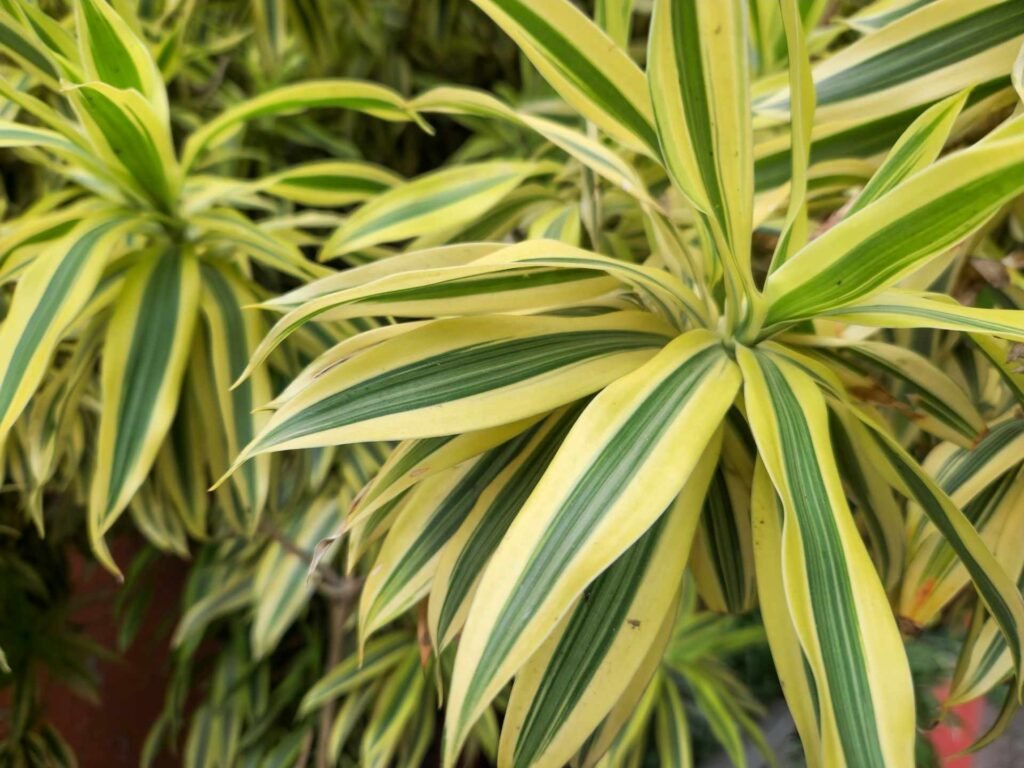
The marginata variety, with its striking red-edged narrow leaves, stays compact enough for a desk or floor placement beside a workstation. The taller fragrans varieties make excellent statement pieces in open-plan offices where you want significant green volume without cluttering workspace. Keep in mind that dracaena is mildly toxic to cats and dogs.
Ideal for: Open-plan offices, floor placement, or anywhere you want visual impact alongside air quality benefit.
ZZ Plant (Zamioculcas zamiifolia)
The ZZ plant is the dark horse of air-purifying indoor plants for offices. It’s not the most glamorous, but research published by the University of Birmingham team found it was one of three plants tested for real-room nitrogen dioxide removal, and it performed with measurable efficacy.
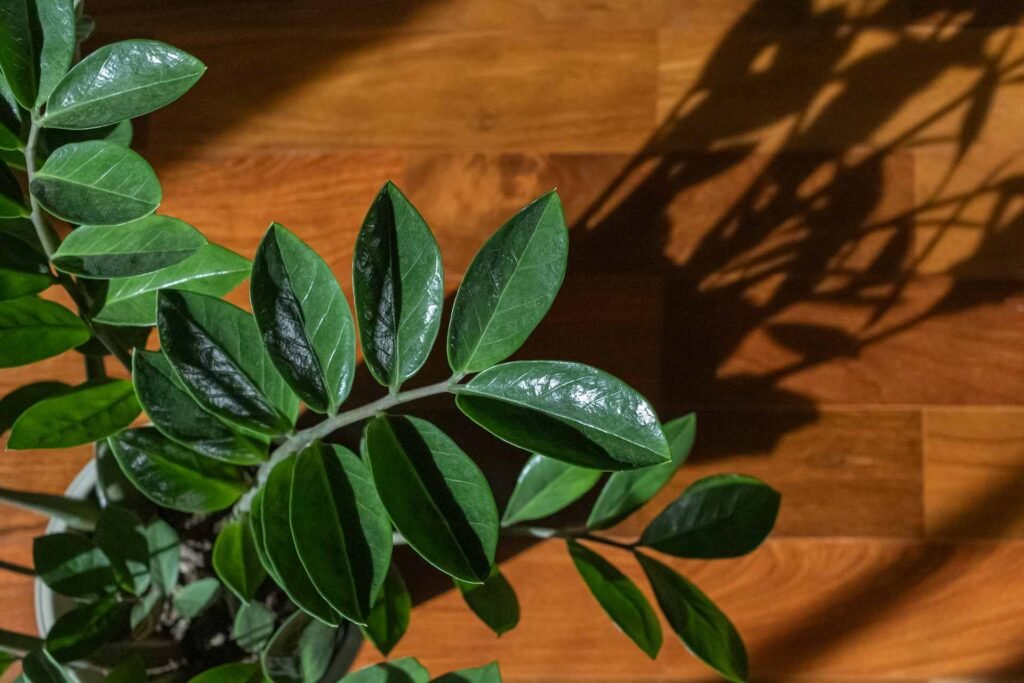
More relevant for office settings: ZZ plants thrive under fluorescent lighting alone. No window required. They need water roughly once every two to three weeks, making them the correct choice for anyone who travels for work or forgets about their plants from Monday to Friday without guilt. They grow slowly, stay tidy, and look genuinely good on a desk.
Ideal for: Window-free offices, desks under fluorescent lighting, frequent travelers.
Side-by-Side: How These Plants Stack Up
| Plant | Low Light? | Pet-Safe? | Primary VOCs Targeted | Desk-Friendly? | Water Frequency |
|---|---|---|---|---|---|
| Spider Plant | ✓ (moderate) | ✓ | Formaldehyde, CO, Xylene | ✓ | Weekly |
| Snake Plant | ✓✓ (very low) | ✗ | Benzene, Formaldehyde | ✓ | Every 2–4 wks |
| Peace Lily | ✓ (low-mod) | ✗ | Benzene, Formaldehyde, TCE | Shelf only | Every 1–2 wks |
| Pothos | ✓ (low-mod) | ✗ | Benzene, TCE | ✓ (trailing) | Every 1–2 wks |
| Dracaena | ✓ (moderate) | ✗ | Formaldehyde, TCE, NO₂ | ✓ (marginata) | Every 1–2 wks |
| ZZ Plant | ✓✓ (very low) | ✗ | Xylene, NO₂ | ✓ | Every 2–3 wks |
The Desk Plant Setup That Works
Individual plant selection is important, but placement and setup have as much impact on your results as species choice. A few things we’ve learned from both the research and from personal experience setting up green workspaces:
Expose the soil. This sounds counterintuitive, but one of the most undersold aspects of plant-based air purification is the rhizosphere. The soil microorganisms that break down VOCs work better when the soil surface isn’t covered with decorative rocks or moss. Air needs to contact the root zone. Wolverton’s own biofilter design specifically incorporated an activated carbon substrate to enhance this contact. A simple self-aerating plant pot keeps the root zone actively ventilated and meaningfully improves the performance of any plant you choose.
Cluster plants together. Placing three plants in one area produces synergistic effects on both VOC reduction and local humidity. Clustering also increases the transpiration output, which matters in dry, air-conditioned offices.
Consider a small fan. Moving air across plant leaves and soil surface increases the rate of VOC contact with the plant system. This is the core principle behind active botanical biofilters, and even a small clip-on desk fan directed gently across a plant cluster can meaningfully boost passive phytoremediation rates.
Light is a multiplier. Plants in higher light produce more leaf mass and maintain higher metabolic rates, both of which increase VOC removal. If your office has limited natural light, a grow light on a timer gives your plants what they need to stay productive. Speaking of lighting setups for your desk, if you’re rethinking that corner of your workspace generally, good desk lamp positioning affects both your own eye comfort and the light your plants receive, so it’s worth considering together.
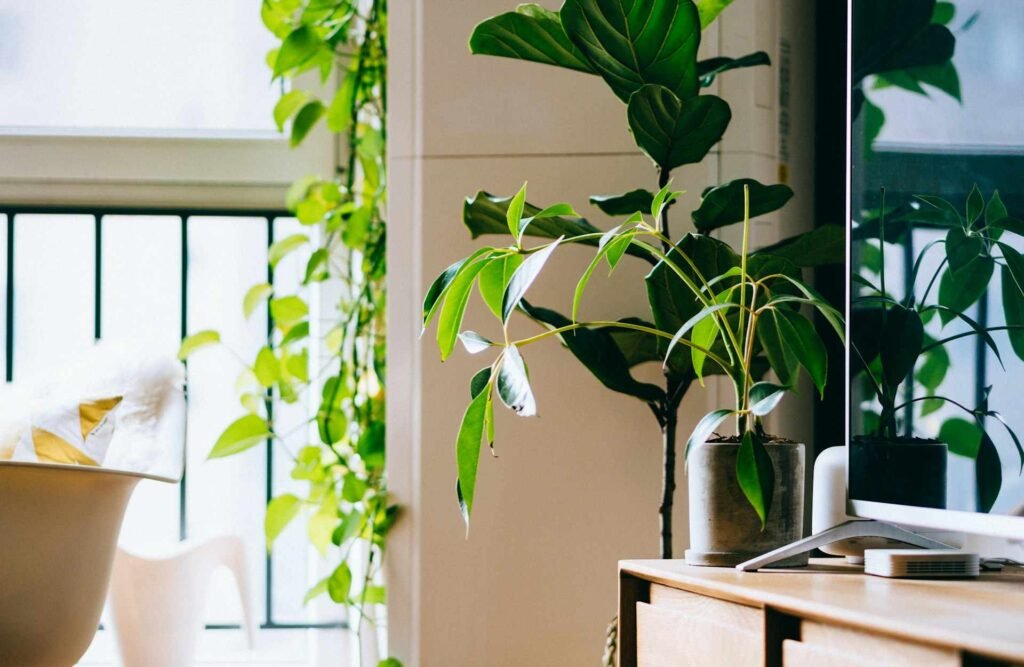
Don’t overwater. Wet, compacted soil grows mold. Mold spores becoming airborne is the opposite of the clean-air goal you’re after. The American Lung Association specifically flags overwatering as one of the ways houseplants can backfire on indoor air quality. Well-draining pots and a consistent but moderate watering schedule keep the soil microbiome healthy without creating fungal problems.
Plants Aren’t an Air Purifier Replacement
The 2019 Drexel University meta-analysis calculated that to match the VOC-clearing capacity of a building’s natural air exchange rate, you would theoretically need 10 to 1,000 plants per square meter of floor space. For context, that’s somewhere between 680 and 68,000 plants in a standard 1,500-square-foot office floor.
Nobody is suggesting that. What the research more practically supports is using plants as a targeted VOC buffer in relatively enclosed spaces, like individual offices, meeting rooms with limited ventilation, or a home office setup where you control the environment. Paired with proper ventilation and a quality HEPA air purifier for particulate matter (plants don’t help much with PM2.5 or PM10), a strategic cluster of air-purifying plants makes a real, measurable difference.
The ideal humidity in your working environment is another factor that interacts with your plant setup, since plants’ transpiration rate affects ambient humidity, which in turn affects VOC behavior. In very dry offices (below 30% relative humidity), VOCs off-gas faster from furniture and carpet, while plants transpiring at their normal rate help buffer this.
The situation is also meaningfully different in a home office versus a large open-plan workspace. In a home office of 100 to 150 square feet, a cluster of five to eight good-sized air-purifying plants is operating at a scale where the math starts to work in your favor, especially in a room with low to moderate ventilation.
FAQ
The Green Desk Is Worth It
Look, we’re not going to pretend that three pothos plants are going to outperform your building’s HVAC system. But we’re also not going to tell you that office plants are just decoration with a scientific backstory. The evidence lands somewhere genuinely useful: the right plants, in the right quantities, placed with at least a little intentionality, do move the needle on the air you breathe at your desk, especially in smaller or lower-ventilated workspaces.
The research on plants and psychological wellbeing in office settings is frankly pretty compelling on its own. Whether your snake plant is scrubbing benzene molecules or just sitting there looking unbothered by your 3pm meeting, it’s probably earning its spot either way. Start with one or two of the species above, see how they fit your space and your watering habits, and go from there. Your desk will look better, your air might actually be better, and at minimum you’ll have something to talk to during the long stretches between video calls.
Looking for more? Check out our work environment category for more articles and guides that may interest you!
Featured image credit: Photo by RDNE Stock project on Pexels
This content is for informational purposes only. Please verify current information directly on the retailer’s site before purchasing.
References:
American Lung Association (2024). Actually, Houseplants Don’t Clean the Air. https://www.lung.org/blog/houseplants-dont-clean-air
Gubb, C., Blanusa, T., Griffiths, A. et al. Potted plants can remove the pollutant nitrogen dioxide indoors. Air Qual Atmos Health 15, 479–490 (2022). https://doi.org/10.1007/s11869-022-01171-6
Cummings BE, Waring MS. Potted plants do not improve indoor air quality: a review and analysis of reported VOC removal efficiencies. J Expo Sci Environ Epidemiol. 2020 Mar;30(2):253-261. https://doi.org/10.1038/s41370-019-0175-9
El-Tanbouly R, Hassan Z, El-Messeiry S. The Role of Indoor Plants in air Purification and Human Health in the Context of COVID-19 Pandemic: A Proposal for a Novel Line of Inquiry. Front Mol Biosci. 2021 Jun 30;8:709395. https://doi.org/10.3389/fmolb.2021.709395
Kim HH, Yang JY, Lee JY, Park JW, Kim KJ, Lim BS, Lee GW, Lee SE, Shin DC, Lim YW. House-plant placement for indoor air purification and health benefits on asthmatics. Environ Health Toxicol. 2014 Oct 8;29:e2014014. https://doi.org/10.5620/eht.e2014014
Li, D., Wang, H., Gao, Q. et al. Study on the ability of indoor plants to absorb and purify benzene pollution. Sci Rep 14, 13169 (2024). https://doi.org/10.1038/s41598-024-63811-4
Rasheed, Hind & T K, Jayasree. (2025). The multifaceted role of indoor plants: A comprehensive review of their impact on air quality, health, and perception. Energy and Buildings. 330. https://doi.org/10.1016/j.enbuild.2025.115312
Steil A (2024). Improving Indoor Air Quality with Houseplants. https://yardandgarden.extension.iastate.edu/how-to/improving-indoor-air-quality-houseplants
Stevens K (2017). USING NATURE AS OUR GUIDE: FIVE PLANTS THAT IMPROVE INDOOR AIR QUALITY. https://sustainability.utah.edu/using-nature-as-our-guide-10-plants-that-improve-indoor-air-quality/
U.S. Environmental Protection Agency (2025). Improving Indoor Air Quality. https://www.epa.gov/indoor-air-quality-iaq/improving-indoor-air-quality
Van Wicklen, Garrett L. (2023). Sick Building Syndrome Is Recognized. https://www.ebsco.com/research-starters/power-and-energy/sick-building-syndrome-recognized
Wolverton, B.C., Johnson, A.H., & Bounds, K. (1989). Interior Landscape Plants for Indoor Air Pollution Abatement. https://ntrs.nasa.gov/api/citations/19930073077/downloads/19930073077.pdf
Last reviewed and edited on 23.02.2026